
Martin Scorsese, the Art of Preservation, and the Unsung Guardians of Film History
Hollywood adores a rescue scene. Someone dangles from a cliff, the orchestra grows feverish, and a hero arrives in the nick of time. Yet one of cinema’s most important rescue operations takes place largely out of sight, with rather fewer stunt doubles and considerably more film cans.
In 1990, Martin Scorsese joined fellow filmmakers including Steven Spielberg, Francis Ford Coppola, Stanley Kubrick, George Lucas, and Robert Redford to establish The Film Foundation. Their alarm was justified: the movies that had helped define the twentieth century were themselves disappearing. Nitrate stock could burn, acetate could decay, colour could fade, and original sound elements could vanish. Stardom, it transpired, offered no immunity from deterioration.
Scorsese had already been advocating for preservation alongside UCLA film archivist Robert Rosen. From the beginning, the Foundation brought filmmakers into conversation with the professionals who understood what was actually at stake. Its founding Archivists Advisory Council included representatives of the Library of Congress, the Museum of Modern Art, George Eastman House, UCLA, and the American Film Institute.
This is an essential distinction. The Film Foundation is not a lone laboratory with a magic wand and an exceptionally glamorous patron. It supports and funds projects undertaken with archives, studios, and specialists, weighing the physical condition, rarity, and cultural importance of endangered films. By its own count, it has helped restore more than 1,100 films.
Then there is the question of artistic integrity. A restoration is not a glamorous filter applied to an elderly film. Conservators and technicians must compare surviving elements, reconcile competing versions, and make informed choices about colour, sound, and original intentions. Even resurrection, it turns out, requires careful stage management.
Consider The Red Shoes (1948), Michael Powell and Emeric Pressburger’s sumptuous ballet drama. Its damaged Technicolor materials demanded a painstaking digital restoration, unveiled in 2009 through work led by the UCLA Film & Television Archive and its partners. For those of us devoted to theatre and dance, the prospect of those magnificent images fading into oblivion is enough to inspire a genuinely operatic response.
Or consider Barbara Loden’s Wanda (1970). Its original 16mm negative was rescued from a laboratory on the verge of closing, reportedly just a day before destruction.
Sometimes the cliffhanger isn’t on screen. It is sitting in a film can.
Nor is this simply a campaign to save Hollywood. Scorsese launched the World Cinema Project in 2007 to recover important works from regions where preservation resources were scarce. It has helped bring 72 films from 34 countries back to audiences. The African Film Heritage Project, established in 2017 with UNESCO, the Pan African Federation of Filmmakers, and Cineteca di Bologna, makes the larger point beautifully: world cinema cannot be represented by the films that happened to survive in the wealthiest archives.
Preservation also demands an audience. Through its free The Story of Movies curriculum, the Foundation has introduced more than ten million young people to cinema as art, history, and cultural evidence. Restoring a film is one achievement; ensuring someone understands why it matters is another.
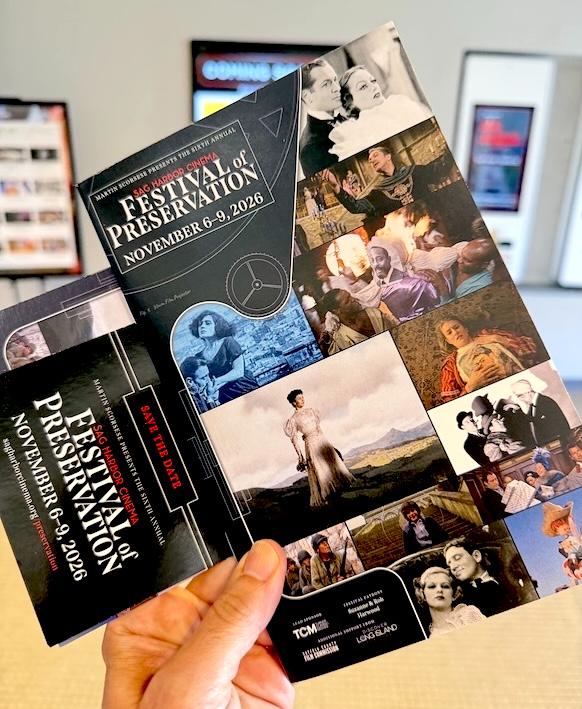
And the connection to our own East End is wonderfully immediate. At Sag Harbor Cinema‘s November 6–9 Festival of Preservation, Gone to Earth (1950) returns in a 2026 restoration by Walt Disney Studios in association with The Film Foundation, with participation from the British Film Institute, George Eastman Museum, and MoMA. The festival is Sag Harbor Cinema’s independent initiative, but its mission and Scorsese’s preservation work make natural companions.
As a playwright, filmmaker and museologist, I am especially drawn to the people behind these resurrections: archivists, conservators, researchers, technicians, and curators. They seldom command the marquee, yet without them the curtain may never rise again.
An old film is not merely an old entertainment. It is a record of how people moved, spoke, dreamed, dressed, protested, loved, and imagined their world. Saving it is not an exercise in nostalgia; it is an act of cultural responsibility.
So here is to The Film Foundation, and to everyone whose work keeps cinema from making a permanent exit.
The credits, surely, belong to them too.
Learn more about The Film Foundation and Sag Harbor Cinema Festival of Preservation.