Sag Harbor Cinema and the Glorious Business of Saving the Movies | November 6–9, 2026 | Sag Harbor, New York
Some theatres have ghosts. Sag Harbor Cinema has an entire second act. And, rather wonderfully, it now spends a long weekend each autumn rescuing other creatives’ heritage.
I have always loved theatres and cinemas: those magical rooms where we voluntarily surrender to somebody else’s imagination, and are positively disappointed if we aren’t thoroughly deceived. My affection for the East End is similarly longstanding. I lived briefly in Southampton in the early 1990s, and Sag Harbor, with its literary ghosts and artistic eccentricities, has always struck me as a village with considerable theatrical temperament.
I happened to be on the East End on December 16, 2016, the morning fire swept through Sag Harbor’s Main Street and devastated its beloved cinema. The destruction of such a cultural landmark felt particularly painful. These places hold more than bricks and mortar. They hold performances, first dates, arguments about the ending, and those rare evenings when we emerge into the street slightly different people.
Fortunately, this particular theatre refused its tragic finale.
The site began as a vaudeville and burlesque house in the 1890s, graduated to silent films and talkies, and acquired its Art Deco character and celebrated neon sign through architect John Eberson’s 1930s redesign. Under Gerald Mallow, who took over in 1978, it became a cherished single-screen art-house cinema. After the fire, its salvaged sign and an extraordinary community effort helped propel a reconstruction. In June 2021, Sag Harbor Cinema reopened as a nonprofit cultural institution with three screens.
Cue the swelling orchestra.
That November came another inspired production: Martin Scorsese Presents: The Sag Harbor Cinema Festival of Preservation. The rescued cinema had decided to rescue cinema.
Its sixth edition runs November 6–9, 2026, under the direction of founding artistic director Giulia D’Agnolo Vallan, with restored classics, unexpected rediscoveries, and the people who make them possible.
The name above the marquee is no mere celebrity flourish. Scorsese founded The Film Foundation in 1990 to protect motion-picture heritage. Working with archives and studios, it has helped restore more than 1,100 films. The festival is Sag Harbor Cinema’s own initiative, but Scorsese’s advocacy and the Foundation’s restorations are closely connected to its spirit and programming.
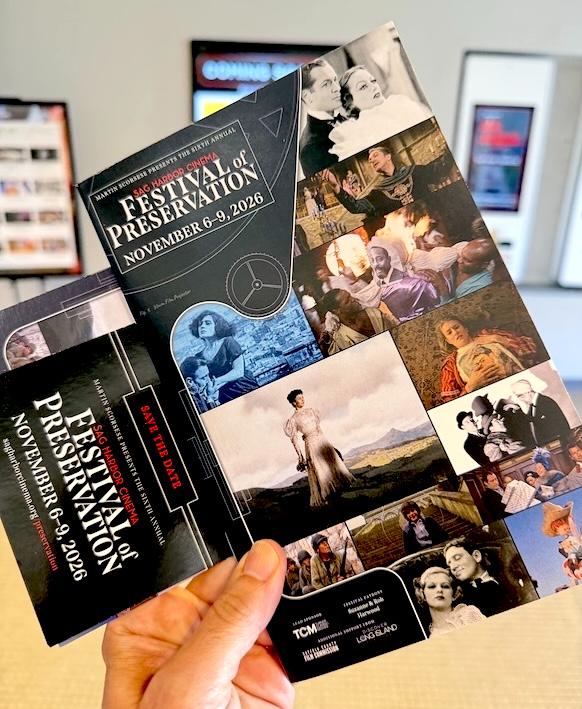
A splendid arrangement: save the films, bring them back to the screen, then let the audience applaud.
And what a programme!
Michael Powell and Emeric Pressburger’s Gone to Earth (1950), starring Jennifer Jones, returns in a reconstructed version after producer David O. Selznick drastically recut it for American release in 1952. Overseen by Thelma Schoonmaker and Scorsese, the restoration was undertaken by Walt Disney Studios in association with The Film Foundation and museum and archival partners. Disney’s Kevin Schaeffer will explain the rescue.
One wonders how much artistic suffering might have been prevented had certain producers simply gone to lunch.
Equally tantalising is ‘A santanotte (1922), by Italian cinema pioneer Elvira Notari. She made around sixty features; only three are known to survive. Harvard scholar Giuliana Bruno will discuss Notari alongside the documentary Elvira Notari: Beyond Silence. This is preservation at its most thrilling: not merely recovering a film, but returning a nearly erased woman to cultural history.
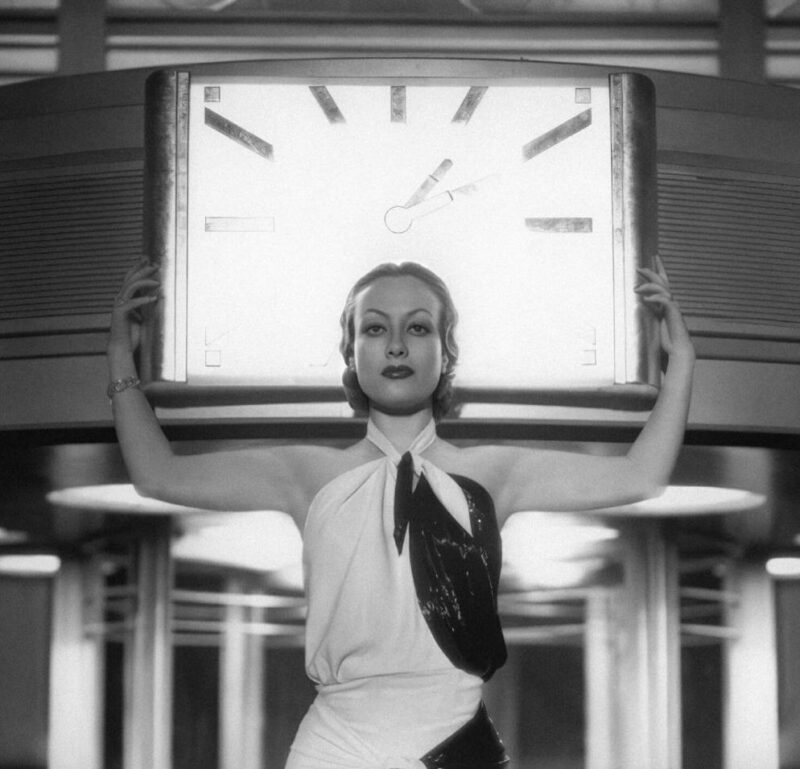
Med Hondo’s spectacular anticolonial musical West Indies: The Fugitive Slaves of Liberty (1979), staged aboard an enormous replica slave ship, arrives with an introduction by the Criterion Collection’s Ashley Clark. Joan Crawford returns in Clarence Brown’s Letty Lynton (1932), inaccessible for decades because of a legal dispute; Raoul Walsh’s rowdy Pre-Code comedy Me and My Gal comes with commentary by Film Forum’s Bruce Goldstein. Brian De Palma’s Obsession and Alexander Payne’s Citizen Ruth also feature, with Payne appearing remotely.
Roger Corman’s centenary will be marked by The Masque of the Red Death, introduced by his daughter Mary; Samantha Fuller presents her father Samuel’s The Big Red One: The Reconstruction; and George Pal’s inventive Puppetoons receive the affectionate attention of historian Arnold Leibovit.
Hollywood’s ghosts, I am delighted to report, have turned out in force.
Yet some of the most compelling performers won’t be appearing on screen at all. At the free Preservation Panel, on Sunday, November 8, Grover Crisp of Sony Pictures, George Willeman of the Library of Congress, Cassandra Moore of NBCUniversal, Kevin Schaeffer, and Arnold Leibovit will discuss the work behind these cinematic resurrections.
Brunch follows. I have always maintained that civilization is best defended with serious conversation and something delicious to eat.
As an art historian and museologist, this is the part that speaks most directly to me. I have spent much of my professional life concerned with how we preserve, interpret, and share cultural heritage. A conservator restoring a damaged painting and a specialist reconstructing a fragmented film are engaged in the same essential undertaking: protecting not only an object, but an artistic intention and a human memory.
Film, however, is a particularly fragile witness. Nitrate stock deteriorates and can burn; acetate succumbs to decay; colours fade and sound elements disappear. UCLA’s Film & Television Archive estimates that roughly half of American films made before 1950 have been lost. The losses are not merely cinematic: they take with them vanished gestures, fashions, languages, landscapes, and ways of seeing the world.
Nor is restoration simply a matter of pressing a digital button. Choosing the most faithful version of a work demands research, judgment, technical expertise, and sometimes considerable debate. These are questions familiar to museum conservators.
And conservation alone is not the end of the story. A film sealed safely in a vault has survived, certainly, but it has not yet resumed its life. Like a painting in a museum, it needs an audience, a context, and occasionally a spirited argument afterwards.
This is where cinema and museology meet so beautifully: preservation becomes meaningful through access, interpretation, and the shared experience of art.
I applaud an institution whose survival means something to me personally and for the extraordinary people determined that our cultural inheritance should not disappear between reels.
The rescued cinema is welcoming rescued films home. You could hardly ask for a better ending.
For the full programme and tickets, visit Sag Harbor Cinema’s Festival of Preservation.