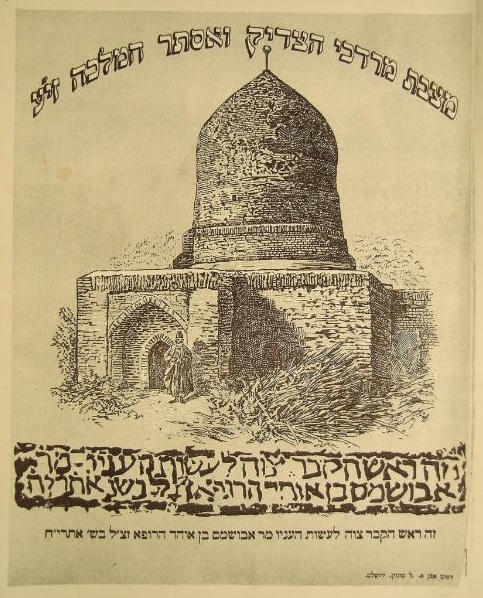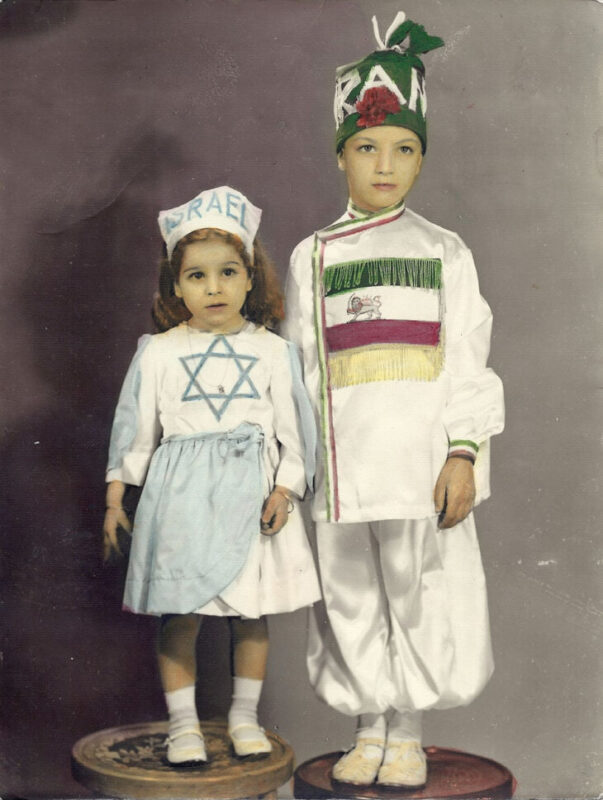
2,700+ years of shared Persian history — and the betrayal of Antisemitism
A Museumviews production: four acts, one intermission, and zero tolerance for counterfeit history.
About the Author (The Playbill Version)
Homa Taj Nasab is an Iranian-born artist, museologist, and storyteller working across film and theater. Of Persian (Khorasan) and Azeri heritage, raised in a secularized Shiite Muslim household with close family ties across Iran’s religious mosaic, Homa left Iran at thirteen and grew up on Long Island—where diaspora becomes a second education in history, identity, and the cost of simplistic stories.
I grew up with antisemitic tropes the way some people grow up with lullabies: Iran, Long Island (NY), UK universities—the tour was international, the script never changed.
I didn’t properly learn the history of the Holocaust until undergrad, where a few art history professors made a sport of mocking Holocaust restitution—proof that ignorance can, in fact, get tenure. Years later, while researching a film project, I finally studied the Holocaust seriously on my own.
By now, as an Iranian-American non-Jew who’s watched the art world audition for racism and Antisemitism with alarming enthusiasm, I’ve heard the entire Protocols scam—sometimes quoted, sometimes remixed, always poisonous.
At this point, I’ve become so allergic to Antisemitism that I break into a rash, and my sarcasm goes into emergency generator mode. Ouch. Brace yourselves.
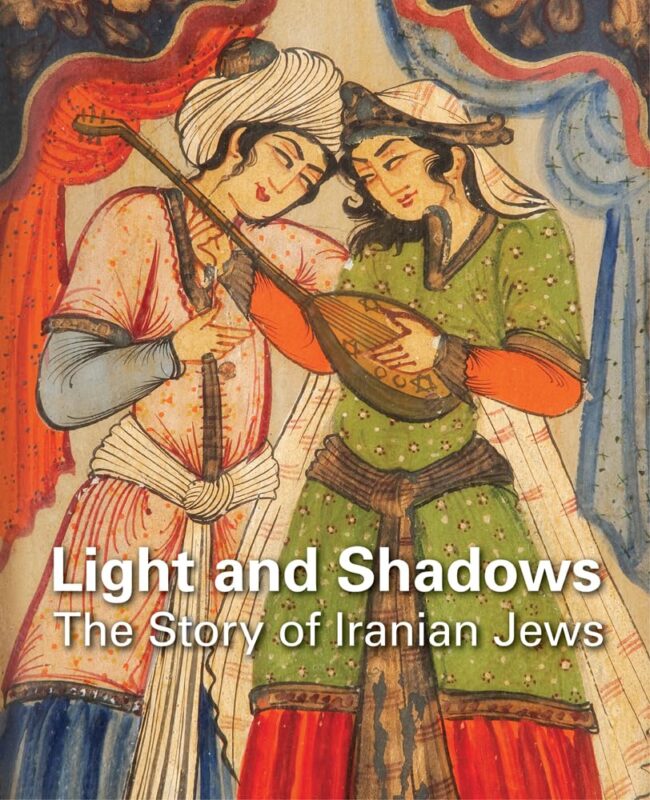
PROLOGUE: Iran Is Bigger Than Its Rulers
Stage Manager’s note: If anyone tries to reduce Iran to a slogan, escort them gently to the exit and offer them a history book on the way out.
Iran is not a government press release.
Iran is language, poetry, food, music, science, humor, hospitality—and a long, intricate practice of living side by side across difference.
That practice becomes most precious in moments of national strain, when fear tries to cut corners and propaganda offers a “shortcut”: turn identity into a target. Pick a minority, inflate it into a myth, and redirect public rage away from the people actually holding power.
So let’s set a boundary at the door, before we step onto the stage:
Iran has more than 90 million people (UNFPA estimates 92.4 million for 2025).
Iranian Jews are a small minority, and estimates vary; one widely cited demographic estimate puts the community at roughly 9,000–12,000 (as of 2012). Their size is irrelevant to the point: a minority’s headcount does not determine its human value.
In other words, the Jewish population in Iran is akin to a rounding error in a nation-sized equation—and yet somehow they’re still expected to carry everyone else’s political baggage.
So no: this is not an essay about “special treatment,” and it is not an invitation to rank suffering. It is a refusal of scapegoating—because scapegoating is how regimes survive: by turning human beings into symbols, and symbols into enemies.
And … to your question, “does everyone pick on Jews primarily?” Not… exactly. Authoritarianism doesn’t do monogamy; it keeps a whole repertory company of scapegoats. But Antisemitism offers something uniquely reusable: a ready-made conspiracy script that casts “the Jews” as a single, supernatural culprit—everywhere, all at once, forever. That is why it’s so efficient. That is also why it is so deadly.
Now that we’ve set the boundary, we can talk about history without feeding hatred, and we can defend a minority without shrinking the rest of the nation. This moment in Iranian life calls for unity beyond identity—through truth beyond propaganda.
ACT I: What Antisemitism Is (And What It Is Not)
Antisemitism is not “criticism.” It’s not a foreign-policy opinion. It is a worldview that turns Jews into a single, supernatural culprit: secretly powerful, uniquely dangerous, permanently guilty.
It typically shows up as:
- conspiracy fantasies (“they control everything”)
- crisis scapegoating (“blame them when things collapse”)
- Holocaust denial/distortion (training people to accept unreality)
- treating Jews everywhere as responsible for any government’s actions
A practical rule for grown-up societies:
You can criticize any government without turning Jews into targets.
That line is not “nice.” It’s civilization’s load-bearing wall.
And yes: Antisemitism spreads faster where free media is crushed, because propaganda fills the silence. When people are denied real information, conspiracy becomes the emotional support animal of censorship.
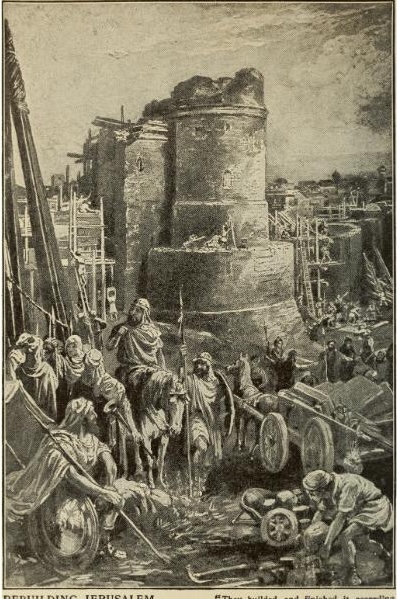
ACT II: A Presence Measured in Millennia
Stage Manager’s note: Propaganda hates timelines. So we’re bringing one. If it complains, tell it to take it up with the calendar.
Jewish life in the Iranian cultural sphere is not a modern cameo. It’s an ancient role with a long contract.
A crisp timeline (no myth, no incense, just dates):
- c. 721 BCE: Large communities of conquered Israelites were relocated “in the cities of the Medes,” in regions associated with today’s Iranian plateau.
- 539 BCE: Cyrus II conquers Babylon; a major Jewish migration and dispersal across the Persian imperial world follows.
- 538 BCE: Cyrus issues an order allowing exiled Jews to return to Jerusalem and rebuild the Temple.
Some returned. Many stayed. Many moved across the empire.
This matters for one simple reason: it makes Jewish life in Iranian lands not a guest appearance and not a “foreign import,” but a long-running presence inside Iran’s civilizational continuity.
If you want the blunt version: the story is old enough that propaganda should stop pretending it just arrived last week with a suitcase and an agenda.
ACT III: “Iranian” Is Not a Single Costume
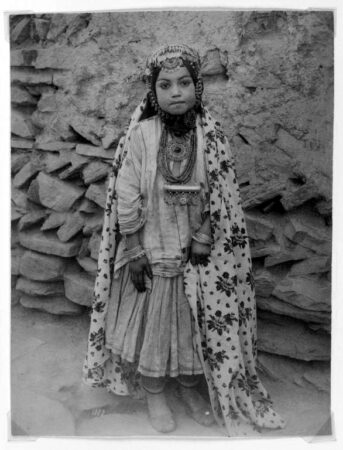
Iranian identity has never been one costume on one body. It is an ensemble production.
One of the clearest pieces of evidence is language: Judeo-Persian includes Persian written in Hebrew script and forms a significant tradition for understanding Persian as used by Jewish communities.
So when someone says, “Pick one identity,” understand what they’re offering: not clarity—control.
Jewish and Iranian is not “half-and-half.”
It’s both/and—the way real histories actually work.
ACT IV: The Modern Trap—Scapegoating as Statecraft
In the 19th century, Jews in Iran faced severe discrimination; forced conversions occurred, including the most famous episode in Mashhad in 1839.
In the 20th century—especially under the Pahlavis—many Iranian Jews experienced greater integration and opportunity. On the eve of the 1979 revolution, the Jewish community numbered around 80,000.
After 1979, many emigrated; those who remained have lived under a political ideology that repeatedly tries to turn identity into geopolitics. And today, again, we land on the sentence that should be printed on the inside cover of every argument:
The Safety Sentence
Aim your criticism at power, not at people.
Collective blame is always marketed as “analysis.” It is actually a permission slip for cruelty—and a bargain-priced substitute for accountability.
INTERMISSION: The Holocaust—Remembrance Without Metaphor
The Holocaust was the systematic, state-sponsored persecution and murder of six million European Jews by Nazi Germany and its allies and collaborators.
Remembering it is not “politics.” It is a defense of reality. And in our moment, reality needs bodyguards.
But here is the crucial point: the Holocaust must not be used as a loose metaphor.
Yes, Iran has endured profound state violence—killings, imprisonment, torture, censorship, persecution of minorities, forced confessions, the grinding theatre of fear. I understand the impulse to reach for the biggest word in the room when you are trying to describe pain.
Still: we can honor Iranian suffering and protect Holocaust memory by drawing a respectful boundary:
- Name Iran’s abuses precisely: state violence, mass killings, imprisonment, censorship, persecution, forced confessions.
- Name the Holocaust precisely: genocide; extermination; industrial-scale killing.
- Refuse the competition of suffering.
Precision is not cold. Precision is respect.
Or, if you prefer it in stage terms: Auschwitz is not a prop. Don’t drag it onstage to make your monologue louder.
CURTAIN CALL: What You Can Do—Today (Executable, Not Symbolic)
- Tell the story correctly: Iranian Jewish history is Iranian history.
- Interrupt the myth—fast and calm: conspiracies thrive on drama; don’t feed them stage lighting.
- Amplify the right voices: Iranian Jews—and Iranian allies across communities who publicly reject Antisemitism.
- Mark Holocaust remembrance with dignity: facts, context, human faces—no rhetorical inflation.
- Make the safety sentence automatic: Aim at power, not people.
Red Flags & Fast Rebuttals
Use these as conversational fire extinguishers: short, factual, low-drama.
- Red flag: “Jews control everything.”
Rebuttal: That’s a conspiracy trope; it replaces evidence with mythology and has been used for centuries to justify persecution. - Red flag: “They’re not really Iranian.”
Rebuttal: Jewish communities have lived on the Persian plateau since antiquity—this is not foreign, it’s foundational. - Red flag: “All Jews are responsible for what a state does.”
Rebuttal: Collective guilt is propaganda logic—hold governments accountable without turning an entire people into targets. - Red flag: “The Holocaust is exaggerated / invented.”
Rebuttal: It is one of the most documented genocides in modern history; denial is not skepticism, it is ideological sabotage. - Red flag: “Antisemitism is just ‘anti-Zionism.’”
Rebuttal: Political critique can be legitimate—but when it becomes conspiracy, collective blame, or dehumanization of Jews as Jews, it is Antisemitism. - Red flag: “‘Anti-Zionism’ is not Antisemitism.”
Rebuttal: It isn’t automatically—but it becomes Antisemitism the moment it stops being about Israeli policy and starts denying Jews (uniquely) the right to collective existence and self-determination, or when it drags classic anti-Jewish tropes back onstage wearing a keffiyeh as a disguise.
Also true: weaponizing Antisemitism accusations to shut down good-faith criticism of Israel is dangerous—because it distracts from real Antisemitism and corrodes public trust.
BONUS SCENE: Thanksgiving Dinner Diagnostics
You can run a clean diagnostic to find out if you’re marrying into the right family:
- The People Test: Are you arguing with a state/policy—or prosecuting Jews as a collective? Collective guilt is antisemitic.
- The Exception Test: Are you denying Jews a right you grant other peoples—especially self-determination? That’s a recognized antisemitic move.
- The Trope Test: Did “Zionists” quietly replace “Jews” in a conspiracy script that’s older than your great-aunt’s samovar? Then it’s Antisemitism with a costume change.
FINAL LINE: The One That Matters
You cannot claim pride in Iranian heritage while shrinking Iran into a single identity and calling it purity. That isn’t pride. It’s amnesia.
And Antisemitism isn’t “an opinion.” It is a blade—sharp enough to cut the country’s own hands while it’s waving it around.
Iran is a tapestry. Don’t let propaganda sell you scissors.
The Playbill (with links)
– UNFPA World Population Dashboard (Iran)
– Law Library of Congress (PDF): Iran—Legal Status of Religious Minorities (includes recognized minorities + reserved Majles seats)
– World Jewish Congress — Community in Iran (DellaPergola estimate 9,000–12,000)
– Encyclopaedia Iranica — Judeo-Persian Communities of Iran (Intro; 721 BCE + Cyrus-era migration)
– Encyclopaedia Iranica — Judeo-Persian Literature (Persian in Hebrew script; significance for Persian language history)
– My Jewish Learning — Jews of Iran: A Modern History (incl. ~80,000 pre-1979)
– Encyclopaedia Iranica — Judeo-Persian Communities v. Qajar Period (persecutions + forced conversions; Mashhad 1839)
– Britannica — Temple of Jerusalem (includes Cyrus’s 538 BCE order allowing return/rebuild)
– USHMM Holocaust Encyclopedia — Introduction to the Holocaust (definition + 6 million)
– UN Holocaust Remembrance (permanent exhibition)
– ADL — Protocols of the Elders of Zion (backgrounder)
– Britannica — Protocols of the Elders of Zion (overview):
– IHRA Working Definition of Antisemitism
– Jerusalem Declaration on Antisemitism (JDA)