I’m old enough to carry 1979 in my bones.
I was a child, but the memory is clean as glass: officials coming into our school, hands that did not ask, pulling us from our desks as if we were papers to be filed. We were taken into the streets and arranged into obedience. We were made into a choir for slogans we did not understand, forced to lend our small mouths to large hatreds, to chant death as if it were a lesson.
Now the anniversary returns like a bruise the calendar keeps pressing.
I see the celebrations of occupation dressed up as triumph, and I see the photographs, little girls stacked on the backs of vans, bundled and transported to rallies, cargo of a state that recruits childhood. It fills me with grief that has weight, grief that knows names, especially when tens of thousands of Iranian families are already bowed under the newest round of killing, the most recent #IranMassacre, their loved ones turned into absences that do not stop speaking.
And then, as if the world’s moral instruments have gone blunt, I wake to lines that should not exist outside a nightmare:
“The United Nations Secretary-General congratulated the Islamic Republic of Iran on the anniversary of the Islamic Revolution.”
And:
“United Nations list showing Iran Foreign Minister Abbas Araghchi to address U.N. Human Rights Council with Antonio Guterres on Feb. 23.”
Words like these land with a cold, official finality, and something in me goes still, not from peace, but from horror. Because there is a particular darkness in ceremony, in the polished sentence that blesses what has been built on cages and graves.
And there is, too, the brutal hush of the cultured and the paid and the positioned, those who can speak in galleries and catalogs and openings, and yet go silent when evil is no longer fashionable to denounce, when it stops performing well in the daily marketplace of attention. Silence, in such moments, is not neutral. It is a choice that wears good shoes.
Yes, this is a kind of lament. A grief with edges. A grief that is not a passing weather but a permanent architecture inside the body.
The kind that does not “move on.”
The kind that becomes a vow:
We will #NeverForget.
We will #NeverForgive.
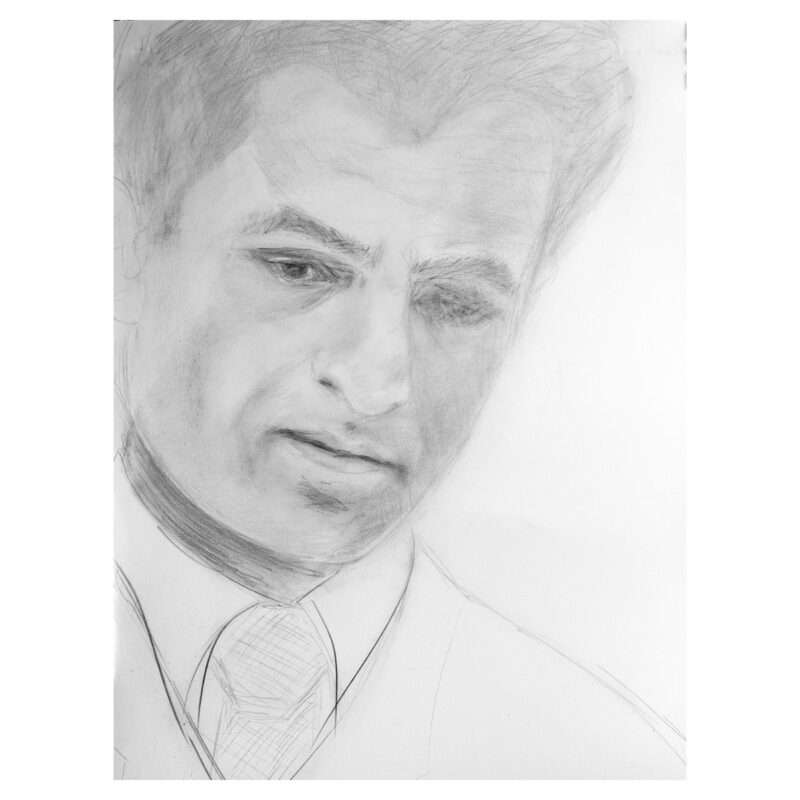
🎨 Mohammad Reza Shah Pahlavi (1919-1980), graphite on archival paper, 2023
من آنقدر سن دارم که انقلاب ۱۳۵۷ را از سر گذراندهام.
آن زمان کودک بودم، اما خاطرهاش مثل شیشه شفاف است: مأموران به مدرسهمان میآمدند، دستهایی که اجازه نمیخواست، ما را از پشتِ نیمکتها میکشیدند بیرون، انگار کاغذهایی هستیم برای بایگانی. ما را به خیابان میبردند و در صفِ اطاعت میچیدند. ما را به گروه کرِ شعارهایی بدل میکردند که معنایش را درست نمیفهمیدیم؛ مجبورمان میکردند دهانهای کوچکمان را به نفرتهای بزرگ قرض بدهیم، «مرگ» را چنان فریاد بزنیم که گویی درسِ روز است.
و حالا هر سالگرد، مثل کبودیای برمیگردد که تقویم مدام روی آن فشار میآورد.
جشنهای اشغال را میبینم که لباسِ پیروزی پوشیدهاند، و عکسها را میبینم: دخترکهای کوچک را روی پشتِ ونها روی هم ریختهاند، بستهبندیشده و منتقلشده به راهپیماییها؛ بارِ دولتی که کودکی را سربازگیری میکند. این تصویر، غمی سنگین در من مینشاند؛ غمی که وزن دارد، غمی که اسم میشناسد، مخصوصاً وقتی میدانم دهها هزار خانوادهٔ ایرانی همین حالا زیر بارِ تازهترین موجِ کشتار خم شدهاند، زیر سایهٔ #IranMassacre، و عزیزانشان به غیابهایی بدل شدهاند که از حرف زدن دست برنمیدارند.
و بعد، انگار ابزارِ اخلاقیِ جهان کند شده باشد، صبح چشم باز میکنم و جملههایی میخوانم که بیرون از کابوس نباید وجود داشته باشند:
«دبیرکل سازمان ملل متحد، سالگرد انقلاب اسلامی را به جمهوری اسلامی ایران تبریک گفت.»
و:
«فهرست سازمان ملل نشان میدهد وزیر امور خارجهٔ ایران، عباس عراقچی، قرار است در ۲۳ فوریه در شورای حقوق بشر سازمان ملل، در کنار آنتونیو گوترش سخنرانی کند.»
این کلمات با سردیِ رسمی و قطعیتِ اداری فرود میآیند و چیزی در من بیحرکت میشود؛ نه از آرامش، که از وحشت. چون در آیین و تشریفات، تاریکیِ ویژهای هست: در جملهٔ صیقلخوردهای که به چیزی مهرِ تأیید میزند که بر قفسها و گورها بنا شده است.
و هست آن سکوتِ بیرحمانهٔ اهلِ هنر و فرهنگ، اهلِ پول و جایگاه؛ کسانی که در گالریها و کاتالوگها و افتتاحیهها صدا دارند، اما وقتی شر دیگر «مد» نیست، وقتی محکوم کردنش در بازارِ روزانهٔ توجه فروش ندارد، ناگهان خاموش میشوند. سکوت در چنین لحظههایی بیطرفی نیست؛ انتخابی است که کفشهای خوب پوشیده.
بله، این هم نوعی مرثیه است. غمی با لبههای تیز. غمی که گذرایِ هوا نیست، معماریِ ماندگارِ تن است.
از آن جنس که «میگذرد» نیست.
از آن جنس که قسم میشود:
ما #فراموش_نخواهیم_کرد
ما #نخواهیم_بخشید