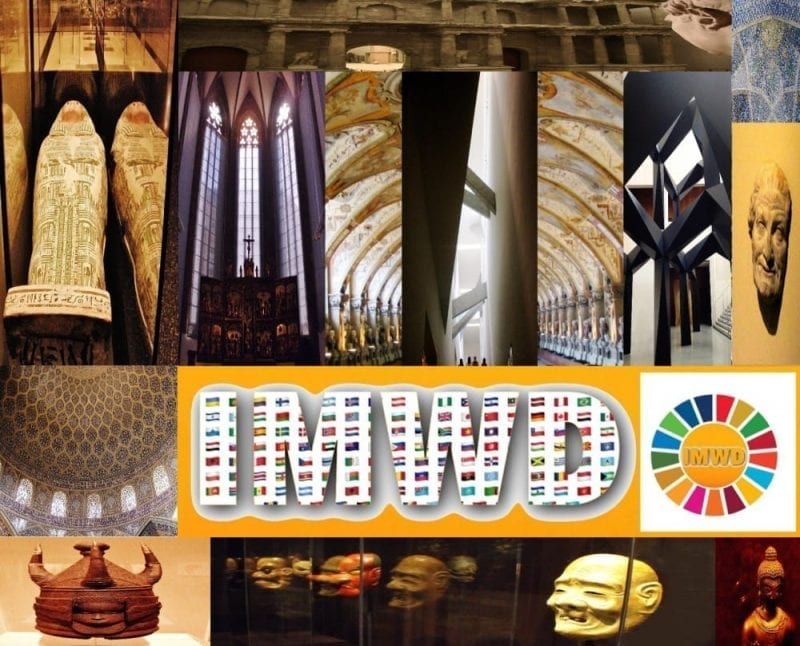
Museums adore a grand entrance. They know their angles. A staircase here, a cornice there, a label composed in the hushed key of authority. They can make a shard, a coin, a textile fragment, or a bronze hand feel like destiny under glass. What they do less often, at least in public, is fling the velvet curtain wide enough to show the people who make that enchantment possible.
That is the stage International Museum Workers Day entered in 2015.
Founded as both a year-round project and an annual advocacy event, IMWD was created to introduce the general public to the multitude of professions involved in the creation, research, discovery, and presentation of heritage. Not just curators, though certainly curators. Not just directors, though they are welcome to the party. IMWD insists on the whole cast list: archivists, conservators, educators, registrars, art handlers, security staff, technicians, librarians, programmers, visitor-relations teams, marketers, facilities managers, and the many others without whom a museum would be little more than a beautifully lit box with commitment issues.
Its first name was wonderfully unserious in the best way. “Hug A Museum Worker,” or HAMuseumW, arrived with charm, cheek, and exactly the sort of light-hearted recklessness one expects from a project trying to humanize a profession often buried beneath institutional prose. But after two years of explaining, patiently and one imagines with some fatigue, that “hugging” museum workers was not meant literally, the event was renamed International Museum Workers Day in 2017. Sensible? Absolutely. Slightly less flirtatious? Also yes. Still, the original title tells you something essential about the project: this was never meant to sound like an audit report in orthopedic shoes.
By 2017, IMWD had sharpened from a clever gesture into a global undertaking. Leading up to IMWD2017 on June 29, the organizers adopted a policy of personally inviting art, design, heritage, and museum workers, as well as institutions and associations, in 192 countries. This matters because it reveals the project’s method as much as its ambition. IMWD began on social media, yes, but it did not leave its fate to the roulette wheel of algorithms. It continued to reach out directly to tens of thousands of heritage professionals rather than depend solely on the internet’s moody, unregulated whims. In museum terms, this was not passive display. It was active acquisition.
The result was formidable. In its third year, IMWD2017 engaged heritage professionals from more than 150 countries, including Bhutan, Azerbaijan, Slovakia, Tajikistan, Moldova, Chad, Indonesia, Sri Lanka, Tonga, Mozambique, Ghana, Cameroon, Belize, Oman, Madagascar, Jordan, Swaziland, Botswana, Congo, Jamaica, Nepal, Kazakhstan, Zimbabwe, Benin, Vietnam, Papua New Guinea, Suriname, Brunei, Haiti, Côte d’Ivoire, Malaysia, Burkina Faso, Togo, the Dominican Republic, Mali, Rwanda, Senegal, South Africa, Yemen, and many others across the Americas and Europe. That is not decorative internationalism. That is actual reach.
And the responses had style. The Met publicly thanked its staff. The Uffizi cheered museum workers on with unmistakable Italian warmth. Art Museum Directors stated with admirable bluntness that their 244 museums could not serve the public without museum workers. Peterhof Museum shared the exacting labor of a curator examining paintings during the dismantling of a show in Belgium. The Bank of England Museum offered a glimpse of collections work in its least glamorous and most truthful form, tackling a backlog of unaccessioned items and finding 18th-century cheques in the process. Queensland Museum, meanwhile, asked the immortal question: what do you call a collection of museum workers? A gaggle? A pride? A herd? Frankly, one calls them the reason the lights come on.
If 2017 established the scale, 2018 clarified the philosophy. Under the theme Museums Beyond Borders, IMWD2018 was marked in 21 languages across 12 platforms, with participation from 20 new countries, bringing the total to 170. It is difficult not to admire the elegance of that title. Museums spend much of their time dealing with borders of every kind: national borders, disciplinary borders, class borders, linguistic borders, funding borders, the border between what is preserved and what is lost. IMWD’s answer was not to pretend such divisions do not exist, but to build an event that moves across them.
That sensibility appears in the project’s own self-description. IMWD suggests it may, in some respects, be viewed as the Switzerland of heritage projects, drawing strength from inclusivity while remaining multicultural and multilingual. It states that it is not affiliated with regional, national, or international institutions or alliances, and not aligned with religious or political groups. Yet it also makes an important distinction: it is impartial, which does not mean neutral. It recognizes the need for strategic partnerships, focused regional policies, and the long-term necessity of public-private partnerships. In other words, IMWD refuses both tribal capture and naïve innocence. It knows the world is complicated. It also knows heritage work happens in that world, not above it.
By 2019, the project’s vision had widened again. For its fifth anniversary, held on Thursday, October 24, IMWD adopted the theme Sustainable Heritage. That choice was not cosmetic. It moved the conversation from recognition to endurance. If museum workers are the ones who sustain heritage, then sustainability cannot mean only preserving objects in a technically competent way. It must also mean sustaining the ecosystems of labor, knowledge, care, interpretation, and exchange that keep heritage alive as a public good.
That is why one of the project’s clearest statements still lands with force: above all, it values the critical power of heritage to help with the exchange of views and ideas, to promote knowledge of other cultures, and to build bridges between nations. It is a sentence with backbone. Heritage here is not reduced to decor, prestige, or tourism varnish. It is civic material. It is intellectual infrastructure. It is one of the last arenas in which a society can rehearse how to look at complexity without immediately demanding a villain and a gift shop.
Behind this project stands MuseumViews, founded by Homa Taj in 2003, and a leadership structure that helped IMWD grow into a project marked in 21 languages, across 12 platforms, and in more than 170 countries. The biographical note in the 2015 to 2019 record matters because IMWD itself is, at heart, an argument for naming labor rather than hiding it. So let the names stand. Let the work be visible. Let the people who build the machinery of culture step briefly into the light they so often angle toward others.
That is IMWD’s achievement in its first five years. It did not diminish the object, the exhibition, or the institution. It simply restored the missing plot. Museums are not miracles that happen by architecture. They are rehearsed, researched, mounted, translated, cleaned, guarded, repaired, catalogued, explained, and opened by people. The label may look serene, but serenity is often a team sport. The gallery may feel timeless, but time in museums is managed by staff on schedules, ladders, and deadlines. The spectacle may be polished, but someone hauled the crates.
International Museum Workers Day has spent its opening act correcting the record with wit, reach, and remarkable stamina. Not by pleading for sentimentality, and not by dressing labor in saintly gauze, but by stating the obvious so clearly it becomes radical: museums are made of workers. And the workers, at long last, deserve top billing.