The Statesman in the Wings
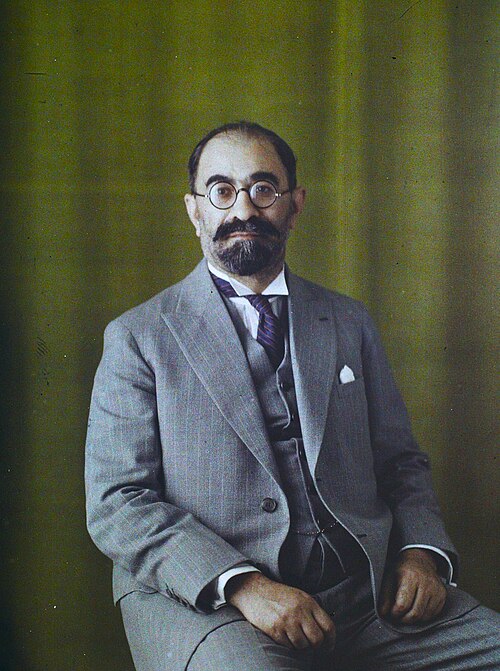
Mohammad Ali Foroughi enters modern Iranian history like a man who somehow managed to be both the stage manager and one of the lead actors. Philosopher, translator, statesman, pedagogue, constitutional-era intellectual, parliamentarian, institution-builder, and multiple-time prime minister, he belonged to that increasingly endangered species: the public thinker who understood that ideas, left untended, do not survive long in the wild. Born in 1875 in Tehran into a family of Iraqi Jewish heritage shaped by letters and state service, he came of age while Iran was being worked over by old grandeur, fresh humiliations, imperial appetites, and internal fatigue. He was formed at the meeting point of classical learning and modern statecraft, and he spent his life crossing that threshold with unnerving fluency. One moment he was writing or translating philosophy, ethics, and history. The next he was helping to steer the country through constitutional change, dynastic transition, and the administrative theatre of modernization. In most countries this would have produced two different men. Iran, being less economical and more dramatic, made one.
What makes Foroughi so compelling, and so dangerous in the best sense, is that he never mistook culture for ornament. He did not regard poetry, antiquities, libraries, academies, and museums as velvet trim on the sleeve of state power. He treated them as load-bearing beams. He understood that if a nation could be weakened by foreign concessions, institutional frailty, cultivated forgetting, and the slow rot of public indifference, then it might also be steadied by public culture organized with equal seriousness. This was not nostalgia in ceremonial dress. It was policy with a metaphysical pulse. Foroughi belonged to that generation of Iranian thinkers and administrators who helped build the very grammar through which a modern cultural nation could speak: heritage societies, academies, educational reforms, public institutions, and the broader architecture that made museums and universities imaginable as national necessities rather than aristocratic amusements.
“A museum is established for the public’s use; if the public does not understand it, neither can it truly benefit from it nor support it as it ought.”
Rooms Where a Civilization Learns to Look
That is why his role in the making of museums and cultural organizations in Iran deserves more than a respectful footnote. During the very decades when Iran was trying to centralize, modernize, legislate, and defend its patrimony from neglect, division, and plunder, Foroughi stood close to the hinge where scholarship became administration. He belonged to the generation that understood museums not simply as repositories of old things, but as instruments for producing a public. Under his tenure in high office, and through his influence in cultural bodies, the museum emerges not as a decorative afterthought, but as part of a broader national syntax: antiquities laws, heritage councils, research bodies, educational reforms, public lectures, and the dignified but deeply political work of teaching a population how to look at its own past.
If the courtroom disciplines the citizen through law, the museum disciplines the citizen through attention. Foroughi knew this. He also knew that attention can be one of the gentlest forms of sovereignty. So when he speaks about museums, he does not sound like a collector admiring cabinets. He sounds like a man trying to rescue memory from accident, vanity, theft, and provincial sleep. The bureaucratic file and the moral imagination, in his hands, were not enemies. They were dance partners. This is what makes him feel startlingly contemporary. He understood that institutions are not just containers. They are choreographies. They organize movement, visibility, hierarchy, feeling. They teach the eye what deserves reverence and the mind what deserves custody.
“Formerly one learned by reading and hearing. Today one must also see.”
More Than a Lecture, Less Than Innocent
This is what makes the essay “What Is a Museum, and What Is It For?” so extraordinary, and so alive in relation to Architecture of Renewal, my forthcoming book about the founding of museums in Iran. On the surface, the essay published on October 23, 1941 in Ettela’at-e Haftegi (Weekly Ettela’at), appears to be a lucid public lecture: a cultivated statesman explaining to a general audience why museums matter. Underneath, it is something fiercer. It is a manifesto for cultural infrastructure disguised as civic pedagogy.
Foroughi begins with a deceptively simple problem: people do not know what a museum is. Worse, they think they do. From there he performs a brilliant reversal. The museum is not a pleasure hall, not a cabinet of royal curiosities, not a room of trophies for the already initiated. It is a mechanism for making knowledge public, refining judgment, widening historical consciousness, and training taste. In his formulation, the museum belongs with the library, the laboratory, the classroom, and the observatory. It is one of the institutional devices by which a society lifts itself above mere appetite. That argument lands with particular force beside the central claim of Architecture of Renewal: that care is not sentiment, but structure; that continuity is not a mood, but infrastructure; that a museum begins when a community decides it will no longer leave survival to chance. Foroughi is writing decades earlier, but he is already standing in that same stern, luminous room.
“Useful history is the history of civilization: a record of how human knowledge, arts, and ways of life have developed and how they continue to develop.”
The Museum as Public Technology
What he offers, in other words, is an early script for the Iranian museum as a public technology of renewal. He sees clearly that the museum does more than preserve objects. It educates the eye, disciplines the mind, instructs the citizen in the long history of civilization, and enlarges the moral imagination through contact with beauty. This is not merely aesthetic uplift. It is nation-making through trained attention.
And here the essay acquires its darker glint, the one that makes it modern rather than merely noble. Foroughi’s museum is generous, but it is not innocent. It is public, but it is also formative. It promises delight, yet it also routes bodies, authorizes narratives, creates standards of taste, and quietly decides which forms of memory will be legible in the modern civic room. That doubleness is exactly what Architecture of Renewal helps us see with greater sharpness. The museum in Iran is never just a house for objects. It is a house for rehearsing a public. It can widen the room into a commons, or it can teach coherence with the cool confidence of a stage director who has already decided where everyone ought to stand.
Foroughi, to his credit, does not hide the ambition. He wants the museum to civilize, to elevate, to gather the scattered inheritance of the nation and make it visible as shared wealth. He wants it to cultivate zoq, taste, and to do so not for a coterie but for the many. It is a high-minded vision, but not a naïve one. He knows that beauty without institutions decays into private luxury, and that history without custody becomes carrion for looters, flatterers, and foreign markets. He knows, too, that a people may possess a magnificent past and still fail to build the rooms in which that past can become legible to the living. The museum, in his hands, is the answer to that danger: not merely a shelter for objects, but a civic machine for producing relation.
“To walk through a museum is, in a sense, to travel through the world.”
Beauty, Instruction, and the Sternness of Care
One of the most arresting dimensions of the essay is its insistence that museums do not merely educate the mind. They refine taste. That word can sound frivolous now, powdered and over-perfumed, but Foroughi means something far more serious by it. Taste, for him, is an ethical and civic faculty. It is the capacity to perceive beauty rightly, and through that perception to enlarge the soul. Beauty is not decorative surplus. It is part of the architecture of becoming human.
This is where the essay becomes unexpectedly severe. Foroughi argues, in effect, that a life devoted only to consumption, rivalry, injury, and survival is unworthy of the human station. The museum enters here not as entertainment, but as instruction in another scale of value. It teaches discernment. It teaches proportion. It teaches that civilization is not only made of laws and armies and ministries, but also of attention, comparison, restraint, admiration, and the slow training of the eye. There is something magnificent in that argument, and something faintly merciless. It leaves little room for the modern habit of treating cultural institutions as optional luxuries, nice if affordable, expendable if not. Foroughi would have looked at that logic the way one looks at a beautifully wrapped coffin.
“Human beings ought to seek three ends: first, the apprehension of truth; second, goodness toward others; third, spiritual delight in the beauty of the beautiful.”
Architecture of Renewal
As I now read Foroughi’s essay in the shadow of finalizing Architecture of Renewal, it feels less like a quaint defense of museums than like an origin scene in the longer Iranian drama of public care. Here is the scholar-statesman announcing that the past must be staged if it is to survive, but staged honorably: with pedagogy instead of plunder, with stewardship instead of accident, with public access instead of dynastic hoarding. Here too is the unmistakable modern wager that a society can repair itself by reorganizing how it remembers.
That is a beautiful wager. It is also a severe one. Museums, Foroughi insists, are not luxuries for idle afternoons. They are schools of perception, theatres of national self-recognition, and workshops in which the public learns to deserve what it has inherited. The darker wit of history, of course, is that every institution built to save memory also acquires the power to edit it. But that is precisely why this essay matters. Foroughi gives us the ideal in its clearest prose: the museum as a civic instrument of truth, beauty, and shared inheritance. My research into the foundational history of museums in Iran has let me watch the heavier machinery grind behind that ideal: the laws, the ministries, the transfers, the staging, the public scripts, the tender and sometimes troubling choreography by which care becomes state form.
Between them, the conversation is electric. Foroughi supplies the credo. Architecture of Renewal traces the wiring behind the walls.
“Whoever visits them [museums] may, at small expense and in little time, undertake a kind of journey across horizons and through history.”