Continued from Part I
Khuzestan, ensemble cast
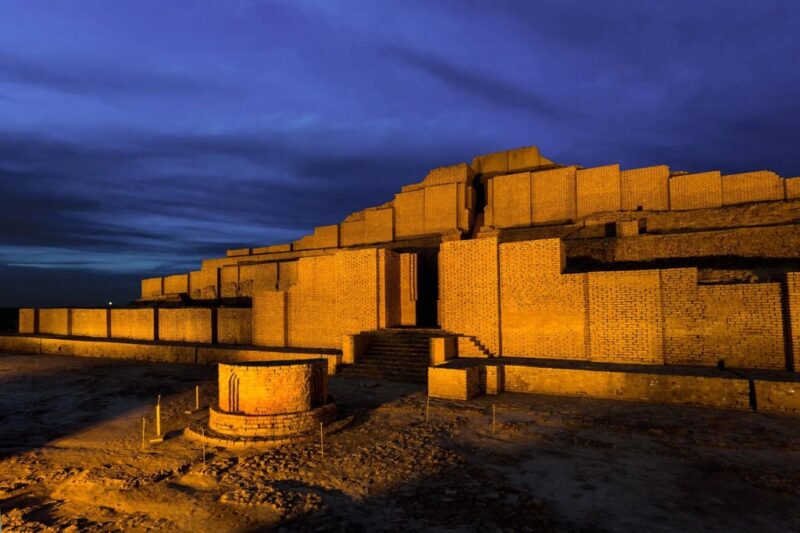
Khuzestan is not only a living Arab cultural region. It is one of the oldest historical landscapes in West Asia. Susa and Tchogha Zanbil make that plain. These monuments are not Arab in origin, and no serious person should pretend otherwise. But they stand in the same geography where Arab-speaking communities later lived, worked, traded, prayed, married, mourned, and made local worlds. That layeredness is the point. Khuzestan has never been a blank edge of Iran. It is an ensemble cast: Elamite, Persian, Mesopotamian, Arab-speaking, Islamic, industrial, wounded, resilient.
Which is why the museum question matters so much. Museums do not simply preserve the past. They stage relations between pasts.
The Susa Museum does that in archaeological form, bringing together material from excavations across periods from prehistory and Elam through later eras. The Abadan Museum does it in modern form, including ethnographic displays that place Arab life within the human portrait of Khuzestan rather than outside it. Abadan, with its oil history and war memory, reminds us of another inconvenient fact: industrial heritage belongs to this story too. Oil shaped cities, labor, migration, class, architecture, and fantasy on a heroic scale. To leave it out would be like staging a family drama and forgetting to mention the inheritance.
Shared sacred inconvenience
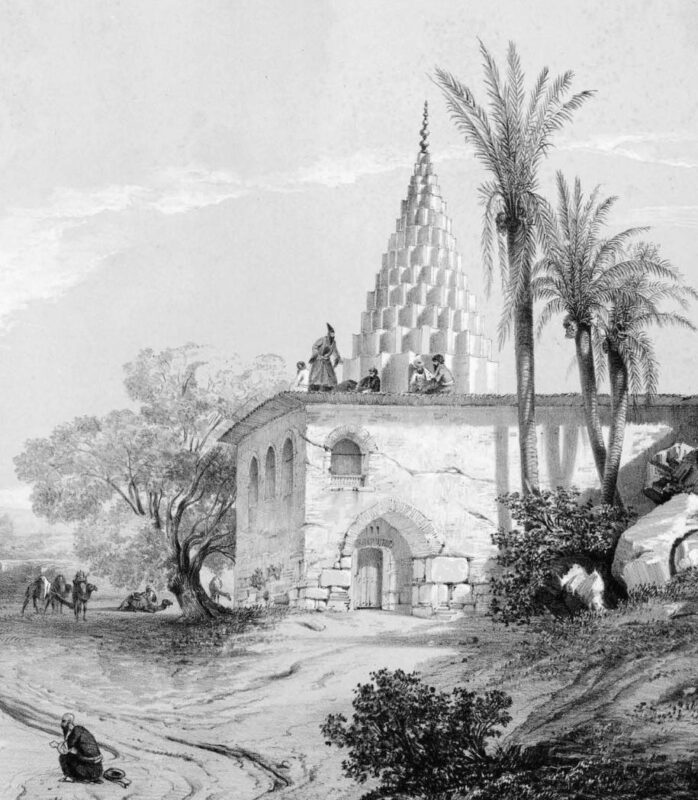
Then there is the Mausoleum of Daniel in Susa, one of those gloriously inconvenient places that refuses the region’s addiction to neat partitions. Local and tourism documentation alike frame it as a site woven through the memory of natives, Muslims, and the Jewish community of Iran, and as a place visited by Muslims and non-Muslims alike. That matters, not because it allows us to perform a sentimental little ballet about harmony, but because it offers evidence against the vulgar modern fantasy that communities in this region have always lived in airtight civilizational boxes. They did not. They prayed near one another, traded stories, inhabited shared cities, and attached memory to the same sacred geography.
And this matters especially in a piece about Arabs in Iran, because the corrective must run in more than one direction. Iranian nationalists who prefer a chemically pure past dislike such sites because they reveal mixture. Sectarians dislike them because they reveal adjacency. Ideologues dislike them because they reveal that public memory is harder to police than slogans. Yet that is precisely why heritage institutions should foreground places like this. Not as sugary exceptions, but as documentary rebukes. They show that Iranian history contains not only conquest and grievance, but also shared sacred life, layered belonging, and forms of coexistence too stubborn to stay buried.
A serious museum culture in Iran’s future should know how to narrate that without becoming saccharine. Shared heritage is not interesting because everyone was nice. History rarely has such good manners. It is interesting because people continued to build, visit, mourn, revere, and remember across difference anyway. That is a tougher miracle, and far more useful.
Museums after the fever
All of this feels even more urgent now. The current war has already produced documented damage to Iranian heritage sites, while broader claims continue to circulate through blackout, propaganda, panic, and the general bureaucracy of catastrophe. In such a climate, museums and heritage institutions cannot merely admire the past. They must keep public memory from being shattered twice, first by violence and then by narrative fraud.
And this leads to the real conclusion. In a post-Islamic Republic Iran, museums will be necessary peace-building institutions precisely because they can do what politics alone cannot. They can protect what is older than the regime. They can show all Iranians – Arabs and other all communities-, as part of the national fabric without flattening them into decorative diversity. They can make room for grief without turning grievance into a governing method. They can stage equal citizenship through evidence, interpretation, language, and public ritual. They can help a traumatized and brutalized society relearn the difference between public memory and official myth.
Iran will not need museums to console it with soft-focus nonsense. It will need museums to behave like honest institutions. Professionally independent. Publicly accountable. Open to complexity. Resistant to ideological capture, whether clerical, nationalist, or oppositional in a fresh necktie. Without that, the rhetoric of renewal will be little more than stage paint drying over old machinery. With it, museums can become part of the architecture of democratic legitimacy itself.
The old harbors remain. The shared shores remain. But after decades of coercion, the task is darker and more difficult than merely preserving ruins or polishing vitrines. The task is to build institutions capable of telling the truth in public. That is what peace-building looks like once the banners come down and the real work begins.
Next stop, I will share my museological adventures in the magical Kingdom of Saudi Arabia.