Arabs in Iran, and the Gentle Power of Heritage
Late in 2025, I spent five weeks in the Persian Gulf region, and the trip rearranged my thinking in the most inspiring fashion. I was flew to Dubai to attend the ICOM General Conference in November, for one week. And then I stayed on, another month wandering through the cultural life of the Emirates with the kind of gratitude that makes one dangerously susceptible to extending flights. I found myself in Abu Dhabi, Dubai, Sharjah, Ajman, Umm Al Quwain, Ras Al Khaimah, Fujairah: each emirate offered a different rhythm, but what stayed with me was the confidence of the cultural design. The museums and heritage sites were elegant without being timid, technologically ambitious without behaving as though the past were an unfortunate relative to be hidden behind a tasteful curtain. They felt public-facing, lucid, and alive.
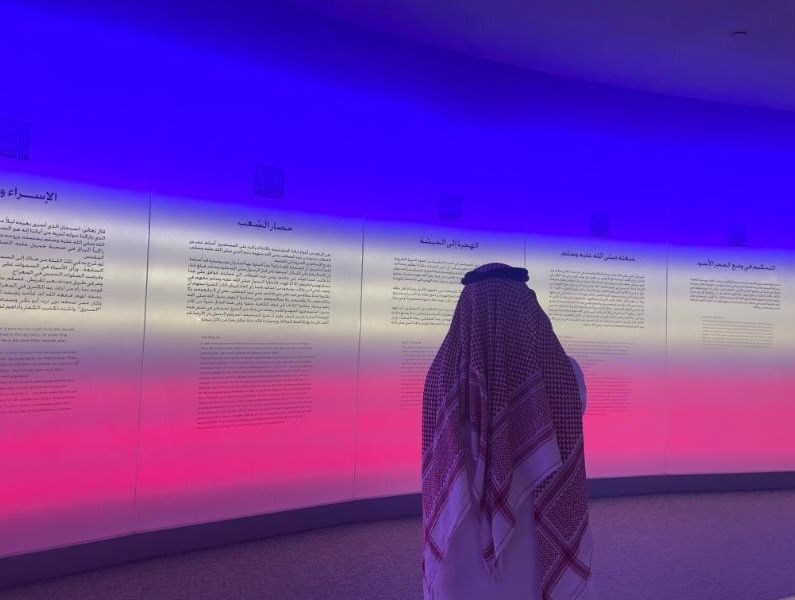
Then came a magical week in Riyadh. My first ever visit to the Kingdom of Saudi Arabia. Having been raised in a Muslim family in Iran, my innate sense of that destination was as a spiritual center for some 2 billion Muslims worldwide who pray toward the Kingdom five times a day. A place where so many elders in my family had made Haj and proudly lived to be addressed Haj Agha’s and Haj Khanum’s.
To my surprise, I found something entirely unexpected. Saudi Arabia may still have fewer museums than one expects from a country now moving at such speed, and parts of its cultural apparatus are still in early institutional life, but the lesson was immediate. There, I watched museums and heritage sites function not merely as places of display, but as places of use. Grandmothers, sons and daughters, in-laws, children, grandchildren, the entire family parliament, spending hours in and around these spaces, picnicking into the late evening, talking, learning, resting, returning. It was enchanting, yes, but also enlightening. Museums at their best are not elite storage chambers with better lighting. They are social architecture.
That memory stayed with me as I began thinking again about Arabs in Iran, not to mention the Persian Gulf region. Because this subject, especially now, requires more than a neat minority profile and a ceremonial sigh about coexistence. It requires historical accuracy, moral honesty, and a firm refusal of lazy narratives in expensive coats.
First, the water
Writing as an Iranian who lived through the first 3 ½ years of the Iran-Iraq war, in a moment when war has once again put Iranian lives, cities, and heritage under terrible pressure, I do not have the luxury of pretending museums are ornamental. They are not. In times of violence and aftershocks, they must become peace-building institutions or they become décor. And décor, for all its virtues, has never yet stopped a society from tearing its own memory to pieces.
So let us begin where we should: not with today’s trauma, but with the older geography of relation. Arab-Iranian contact predates Islam by centuries upon centuries. In fact, it reaches back roughly three millennia. That matters. Because the old and poisonous simplification is to speak as though Arabs arrived in Iran only with the Muslim conquest and remained thereafter as unwelcome guests in a Persian house. History says otherwise. The Persian Gulf has never behaved like a clean border. It has been a corridor, a conversation, a zone of exchange where trade, kinship, language, ritual, seafaring, and survival crossed water long before they crossed ideology.
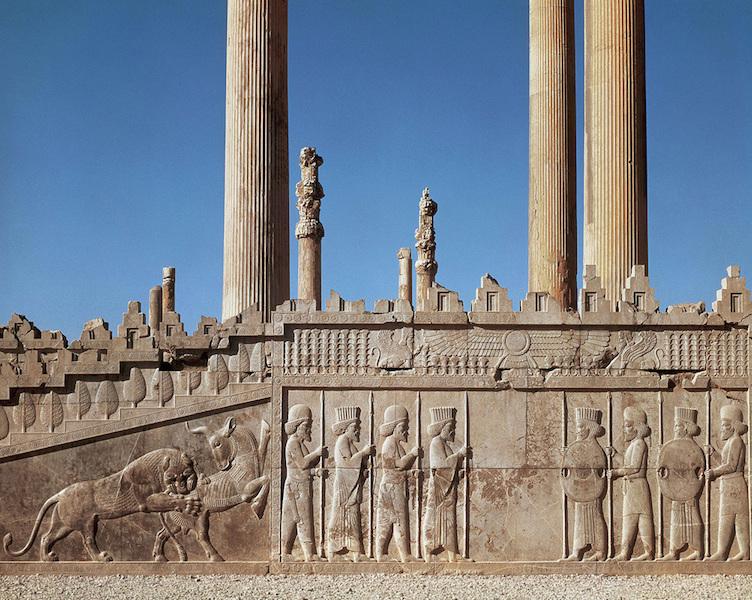
Already in the Achaemenid world, Arab territories and Arab intermediaries appear in the imperial story. By late antiquity, Arab groups were entangled with Sasanian frontier politics, commerce, and military arrangements. None of this requires sentimentalizing the past. It simply requires abandoning the fiction that Arabs are somehow alien to the longer history of Iran. They are not.
The harder admission
Here is where we must name an ugly truth, plainly and without powdering it for company. And, I write this as a half-Persian, half-Azeri Iranian with no Arab roots: anti-Arab racism exists in Iran, and it is neither rare nor harmless. It is one of the republic’s quieter inheritances and one of some Iranians’ more embarrassing habits. Some of it grows out of a deeply lodged historical trauma around conquest, yes. But some of it has also been fed, for decades, by the Islamic Republic’s particular genius for moral vandalism. The regime has committed cruelty, theft, censorship, torture, and murder in the name of Islam so relentlessly that, in the minds of many wounded Iranians, “Islamic” has collapsed into “Arab,” as though an entire people were somehow responsible for the crimes of a state apparatus in Tehran. That collapse is historically false, politically idiotic, and morally indecent.
Arab citizens of Iran are not stand-ins for seventh-century conquest. They are not proxies for clerical rule. They are not props in a nationalist melodrama that requires permanent villains in order to feel emotionally organized. They are part of Iran’s own social fabric, including some of its oldest regional communities. And that is precisely why museums matter here. A good museum does not flatter inherited prejudice. It interrupts it. It puts complexity back on stage. It reminds the visitor that history is not a blood-purity pageant for the resentful.
Today’s Arabs, not a footnote cast as scenery
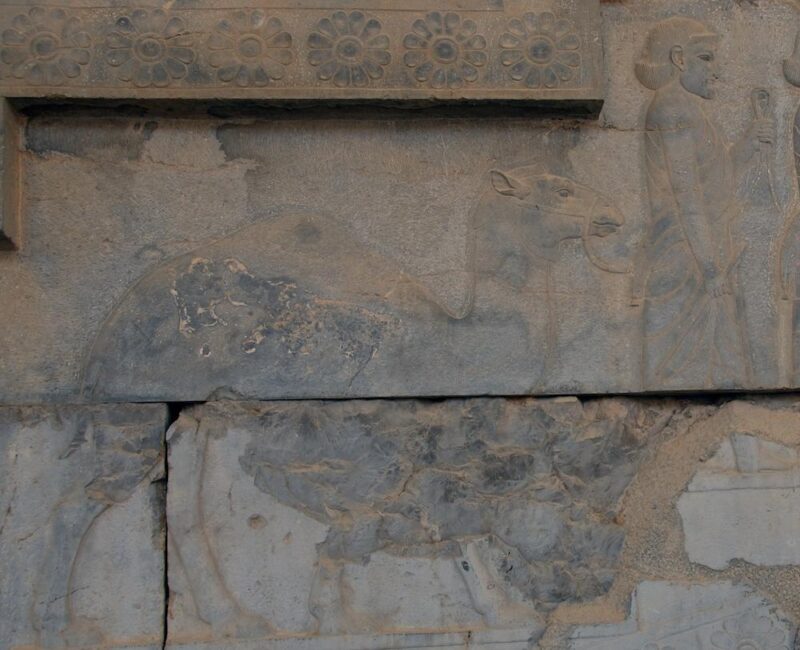
There is no current official Iranian census that gives a precise ethnic count for Arabs in Iran, and one should resist the temptation to perform certainty in a sequined costume. Estimates vary. The safest formulation is that the number likely falls somewhere between 1.6 and 4 million, with around 2 million a fair working estimate. Whatever number one uses, the larger point remains: this is not a decorative demographic aside. It is a substantial Iranian public.
Khuzestan is the heart of the story, but not its only stage. Arabic is also spoken in parts of Bushehr and Hormozgan, especially in coastal communities shaped by old maritime life. In other words, Arab cultural life in Iran is not a single specimen pinned to one provincial board. It is a living southwestern and coastal arc, formed by trade, bilingualism, fishing, migration, date cultivation, ritual life, and the old choreography of Gulf exchange.
In a future democratic Iran, this will matter enormously. Because a country cannot spend decades being brutalized by ideological rule and then rebuild itself by redistributing the hatred to a different target. That is not recovery. That is costume change. Museums and heritage institutions, if they are professionally independent and publicly trustworthy, can help break that cycle by presenting Arab life in Iran not as an intrusion into the national story, but as part of its historical depth, regional reality, and civic future. That is not sentimentality. It is institutional hygiene.
The marsh is the first museum
Before a museum has walls, it has a landscape.
The wetlands around Shadegan and the broader marsh world near the Iraqi border are not merely ecological zones. They are archives in liquid form. Reeds, boats, fishing paths, birds, channels, tea arriving by water, guest customs shaped by vulnerability and reciprocity, all of this belongs to cultural history as surely as any stone inscription. Heritage is not only what is carved. It is also what is practiced.
At the most earthly level, these marshes teach interdependence. They teach that coexistence is not a slogan one hangs in a conference hall, but a practical arrangement among people sharing water, routes, labor, weather, and risk. In a country faced with an unprecedented water crisis, water has very little patience for ideological theater. It tends to demand cooperation first and speeches later.
In Iran, the task ahead is not to invent culture from scratch. The country already has a broad heritage network: some 830 museums, more than 40,000 nationally registered heritage sites and monuments, and a wider ecology of archives, galleries, historic houses, and site museums. The task is to protect it, depoliticize it, professionalize it, and activate it in public life.
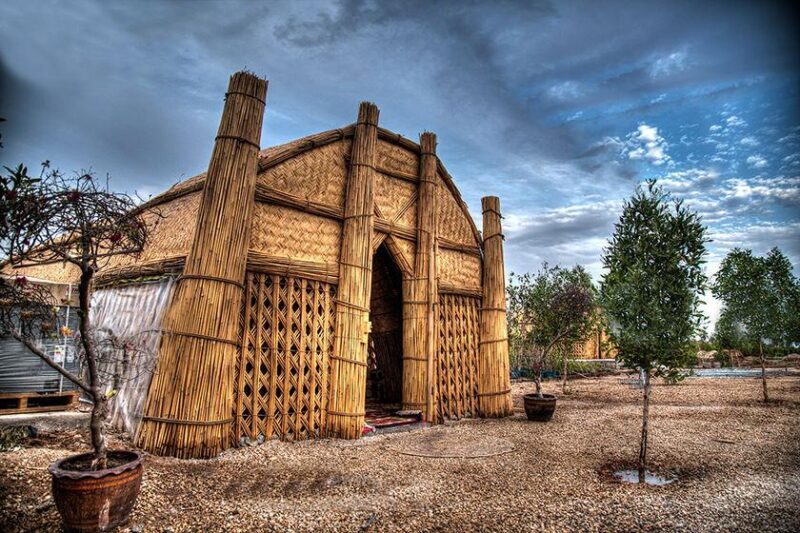
Enter the mudhif, with all due dignity
Out of the marsh world rises one of the most elegant structures in the Arab cultural life of southwest Iran and southern Iraq: the mudhif, the great reed guesthouse.
Now here is architecture with civic manners. The mudhif is not simply a building. It is a place of reception, storytelling, ceremony, negotiation, and conflict mediation. It turns local material into social intelligence. One might call it a guesthouse, but that feels underdressed. It is also a chamber of memory, a theater of hospitality, and a rehearsal room for coexistence.
If museums want a lesson in peace-building, they could do worse than study a structure built on the assumption that people must be received before they can be argued with. Frankly, quite a few ministries could use the same lesson.
Continued … to Part II