How war, corruption, and land subsidence are undoing Iran’s cultural heritage
The missiles arrived late to a demolition already underway.
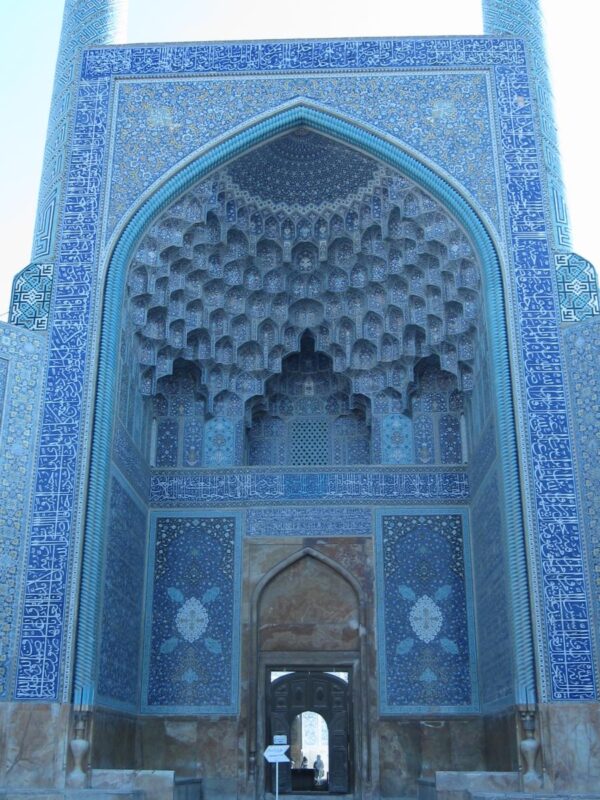
UNESCO has now confirmed damage to at least four World Heritage sites in Iran during this war, including Chehel Sotoun and the Masjed-e Jame of Isfahan. That is the immediate outrage, and it deserves every alarm bell it has set off. But the harder truth is that foreign fire did not strike a heritage landscape in full health. It struck one already worn down by years of domestic neglect, bureaucratic evasions, distorted priorities, opportunistic development, and the Islamic Republic’s special talent for praising history while quietly helping to ruin its chances of survival.
Neglect is less photogenic than bombardment, but often more efficient. A missile has the decency to announce itself. Administrative decay prefers softer shoes. It arrives as delayed maintenance, anaemic restoration budgets, emergency interventions that begin after collapse, and monuments treated as tourism brochures first and responsibilities second. In Iran, national registration can behave less like protection than like a certificate of future disappointment. If war is the loud vandal, state negligence is the patient one. It waits. It lets water, confusion, bad planning, and time do the heavy lifting.
Take Isfahan, where the built record of Iranian history is so dense one can barely throw a careless adjective without hitting a century. Near the Jameh Mosque, the historic Abu Eshaqiyeh House Complex has been described by heritage activists as “breathing its last.” The phrase sounds theatrical, but then so does collapse. These houses are nationally registered, yet activists say registration has not brought meaningful emergency protection, stabilization, or rescue. Some roofs are gone, some sections have fallen, and responsibility has moved from office to office with the brisk elegance of a bureaucratic relay race in which no one wants to cross the finish line holding the invoice. In a city at the heart of Iran’s world heritage, even listing can resemble being ignored in a more official font.
The same script has played out elsewhere. In Tehran, the Qajar-era Amin Lashkar House in Oudlajan had to decay into public scandal before restoration finally began this January. Officials themselves acknowledged serious damage after years of abandonment, erosion, and ownership complications. This is the familiar sequence: activists warn, officials drift, damage accumulates, outrage flares, and emergency work arrives with the exhausted dignity of a man congratulating himself for bringing a bucket to a house fire he has already watched for years.
Isfahan’s Kazeruni Mosque offers the same grim comedy in a harsher register. The mosque reached the National Heritage List only after years of neglect and repeated protest. Even then, registration did not produce calm. Last year, reports said the southern shabestan was attacked with bulldozers despite cultural heritage objections, and that the work was carried out at night amid claims of contradictory permissions and murky coordination. Bureaucracy, in this version, enters with a stamp and exits under construction lights.
Elsewhere, the state’s relationship to heritage can feel like a romance conducted entirely through ticket sales. Hafezieh, the tomb of the great Iranian poet Hafez, remains one of the most visited cultural sites in the country. During the 2025 Nowruz holidays, it drew hundreds of thousands of visitors and ranked among Iran’s busiest heritage destinations. Yet heavy footfall has not purchased vigilant preservation. In late 2025, part of the muqarnas of the Qavami building in the Hafezieh complex collapsed. Heritage researchers cited time, natural factors, negligence in protection, and the absence of timely restoration and regular monitoring. The contradiction is almost indecent in its neatness: the state can count visitors, celebrate the poetry, sell the memory, and still fail to keep the ornament attached.
And it profits handsomely from the privilege. Iran’s culture minister said last year that the country earned about $7.4 billion from foreign tourism in the previous Iranian year, with roughly 7.4 million international visitors. Isfahan is one of the crown jewels in that economy. During just seventeen days around Nowruz 2024, the province recorded more than 4.6 million visits to museums and historical sites. At the same time, Isfahan has rolled out tourism investment with the zeal of a city selling its drawing room while forgetting to repair the ceiling. Investment materials have advertised around 110 ready-to-build tourism packages, and officials have promoted subsidies so generous that the municipality covers 99 percent of hotel construction permit fees. Development is not inherently the enemy of heritage. A living city must continue to live. But when hospitality is subsidized, investment is fast-tracked, and historic districts are mined for value while the monuments themselves remain chronically exposed, the corruption of priorities becomes hard to miss. The state knows exactly how to monetize beauty. It is far less disciplined about maintaining the conditions that make beauty last.
The budget tells the same story in colder prose. Public reporting on the proposed 1405 budget has warned that the Ministry of Cultural Heritage, Tourism, and Handicrafts faces higher operating pressures while money directly tied to restoration, conservation, tourism infrastructure, and handicrafts remains under severe strain. ISNA published the ministry’s proposed allocation. Separately, reporting based on reviews of the budget bill and summaries circulated by activists argued that current expenditures rise by roughly 24 percent while capital asset acquisition, the line most directly tied to restoration, site organization, and heritage infrastructure, falls by more than 29 percent. I have not been able to independently verify those exact percentages in the full parliamentary text, so they should be treated as attributed budget summaries rather than settled official arithmetic. But the direction is clear enough. More money for the ministry’s metabolism, less for the monuments. The paperwork may remain solvent. The plaster is invited to improvise.
The treatment of movable heritage inspires no great confidence either. In January 2025, 151 artifacts from major museums in Tehran were sent to China for exhibition. Lending abroad is ordinary museum practice. What unsettles is the climate of opacity around such decisions, because opacity in Iran is rarely an innocent accessory. When communication shrinks, cultural diplomacy starts to look like negligence with a passport.
At the institutional level, priorities grow stranger still. In 2025, authorities ordered the closure of Tehran’s National Water Museum to make way for a Quran Museum, prompting criticism from museum professionals and Iran’s ICOM leadership. The problem is not religion versus heritage. That is a lazy quarrel. The problem is administrative cannibalism. Instead of expanding cultural infrastructure, the state shuffles museums around like furniture, displacing one memory so another can sit in its chair.
Development projects have long supplied the rest of the tragedy. The Jameh Mosque of Isfahan has faced warnings over rising moisture, drainage failures, and the risks posed by Metro Line 2 nearby. At Kamar-Zarrin, excavations connected to development have exposed a deeply layered historic urban structure, rich enough to alter our understanding of Isfahan’s past. Iran has heard this story before. The Sivand Dam controversy near Pasargadae became a national and international dispute because conservationists feared increased humidity, flooding, and environmental change could endanger the wider setting of Cyrus the Great’s tomb and surrounding remains. Even Pasargadae, the first dynastic capital of the Achaemenid Empire and prototype of the royal Persian garden, could be treated as collateral to hydraulic ambition. In Iran, development too often behaves as though history were a scheduling inconvenience.
Land subsidence deserves more than a cameo in this story, because in Iran it is not simply an environmental problem. It is a slow political crime scene. A 2024 remote-sensing study found that about 56,000 square kilometers, or 3.5 percent of Iran’s land area, is already affected by subsidence, with roughly 3,000 square kilometers sinking at rates above 10 centimeters a year. The same research tied the crisis mainly to groundwater extraction for irrigation and estimated annual depletion of 1.7 billion cubic meters from confined and semi-confined aquifers. Other scientific work found that roughly 77 percent of Iran’s land is under extreme groundwater overdraft, meaning human withdrawal is outpacing natural recharge by more than threefold. In plainer language, the state has been mining the ground beneath the country and then acting surprised when the floor develops opinions. This is why subsidence in Iran is often described as a “silent earthquake”: it cracks roads, rail lines, pipelines, airport surfaces, and foundations without the courtesy of a single dramatic day of reckoning. The disaster is quieter, slower, and more sinister because it has been administered through decades of over-pumping, distorted land management, and the sort of corruption that turns environmental limits into paperwork obstacles for the well-connected.
For a country like Iran, with a vast built heritage, immense archaeological plains, and untold layers of buried history still unexcavated, this is especially catastrophic. The minister of cultural heritage said in 2025 that around 4,000 historical sites and structures are at risk from land subsidence, while geologists later warned that nearly half of Iran’s valuable historic fabric lies in subsidence-prone zones, including 63 nationally registered monuments and 27 world-class sites. In Isfahan, ground settlement linked to the drying of the Zayandeh Rud has raised alarms for Naqsh-e Jahan Square, the Shah and Sheikh Lotfollah mosques, and the Safavid bridges. In Fars, experts said subsidence had advanced to within 10 meters of Naqsh-e Rostam and 300 meters of Persepolis, with parts of the Marvdasht plain sinking by 20 to 30 centimeters a year. The cruelty of this process is that it does not threaten only what is already visible. It also endangers what remains buried. A bomb may shatter a palace wall; subsidence can distort an entire archaeological landscape before a trench is ever opened. It can warp stratigraphy, widen fissures, drain soils, and quietly crumple the archive beneath the surface. In a country as layered as Iran, the ground is not just sinking under monuments. It is sinking under memory itself.
Some cases suggest something even more corrosive than neglect: appropriation. One especially disturbing allegation, which I include only as an attributed field report and not as an independently verified public finding, concerns Sari in Mazandaran Province. According to those reports, a two-story building inside the mausoleum precinct of Molla Majd al-Din has been converted into a base for IRGC repression forces, where commanders and local informants gather late into the night. If accurate, the image is chilling. Not bombardment from without, but occupation from within: heritage enlisted as logistics, sanctity repurposed as surveillance décor.
And in a final flourish of state farce, the authorities have only now begun placing the Blue Shield emblem on historic buildings and museums across the country, reportedly at more than 120 sites, after Golestan Palace, Chehel Sotoun, Ali Qapu, the Masjed-e Jame of Isfahan, and heritage areas around Khorramabad had already been damaged in the war. Iran and Lebanon have also asked UNESCO to place more sites under the organization’s enhanced-protection mechanism. The timing is beyond embarrassing. The Blue Shield emblem is not some spontaneous invention of wartime panic. It is part of the legal architecture meant to mark and protect cultural property before the blast wave arrives. Preparation, one might say, was always supposed to happen before the mirrors shattered.
On the twelfth day of the Iran war, Ali Hezbari, Director of Rey Cultural Heritage, began arguing that Iran should move immediately to join the Blue Shield framework more fully so the country is not left begging UNESCO and emergency committees for help each time its monuments enter the crosshairs. Iran is already a party to the 1954 Hague Convention’s Second Protocol, yet it is not listed among Blue Shield International’s registered national committees. Blue Shield itself has existed since 1996 precisely to help countries build protection before catastrophe, not improvise it afterward like a man buying umbrellas in a flood. There is something painfully Islamic Republic in this sequence: the state waits until after the fresco cracks, after the glass falls, after the world looks on in disbelief, and only then remembers that cultural protection is meant to be a system, not a sticker.
No serious person confuses broken buildings with broken bodies. Human loss leads, as it must. But cultural damage is not decorative sorrow, and heritage is not a luxury subplot reserved for peacetime aesthetes. A palace, a mosque, a house, a museum, a mausoleum, a ruined cornice, a cracked fresco, a reflective pool: these are not props waiting in the wings while “real history” happens elsewhere. They are among the places where a society stores continuity.
That is why the danger to Iran’s cultural heritage is not simply war and destruction. It is domestication into slogans, revenue streams, improvised uses, and ceremonial self-congratulation. A monument becomes a tourism image. A museum becomes a bureaucratic bargaining chip. A historic house becomes a liability waiting for a holiday weekend. A registered site becomes a legal ghost. And the state, with typical solemnity, goes on speaking of civilization as if the word itself were a maintenance plan.
It is happy to stand in front of heritage. It is far less eager to stand behind it.
War has terrible taste. Bureaucracy, one should add, is no great aesthete either.